June 14, 2022

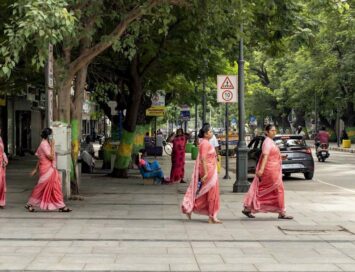
Cities designed for pedestrians and cyclists are cities designed for people. The majority of the world’s population — especially in the Global South — travels primarily by foot or bicycle. Yet, transport planning continues to prioritize private cars, sacrificing sidewalks, safe crossings, and cycling infrastructure. This car-centric approach not only undermines equity but also accelerates climate impacts. Increasing bicycle use and making walking easier are among the most affordable and effective strategies for reducing greenhouse gas emissions, improving public health, and expanding access to economic opportunities. These changes create vibrant, people-friendly cities that work for everyone.
Despite this, many cities still lack the basics: continuous sidewalks, safe crossings, protected bike lanes, and public spaces free from illegal parking. In some places, cyclists face harassment and unsafe conditions that discourage active mobility. These barriers disproportionately affect low-income communities, women, children, and people with disabilities — groups that rely most on walking and cycling.
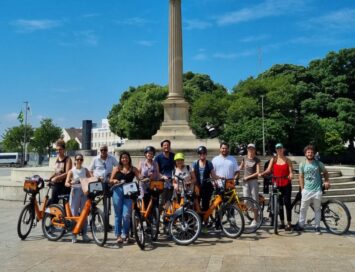
The good news: change is happening. Cities worldwide are embracing bike share systems, e-bikes, scooters, and other alternatives to private cars, integrating them into public transport networks. Real estate developers in major markets are responding to demand for walkable neighborhoods with less parking and more public space. These shifts signal a growing recognition that streets should serve people, not just vehicles.
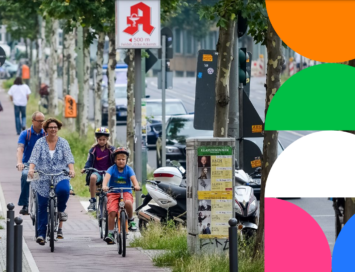
Since 1985, ITDP has partnered with cities worldwide to design streetscapes that prioritize pedestrians and cyclists. Our work includes building sidewalks, footpaths, and greenways; launching bike-share programs; and creating protected cycling networks that make active travel safe and enjoyable for people of all ages and abilities. We’ve introduced modern cycle-rickshaws, still used by over half a million people in India, and pioneered “car-free days” that reimagine streets as shared public spaces. These efforts demonstrate that transforming streets is not only possible—it is essential for equity, sustainability, and livability.
 Between 2021 and 2025, ITDP’s Cycling Cities Campaign worked to equip governments, planners, advocates, and others with the tools to make cycling a safe and affordable transportation option worldwide. Composed of a global coalition of cities, civil society organizations, and private sector partners, the Campaign aimed to help every city become a true ‘cycling city.’