September 2, 2021

The United States is the source of many car-oriented policies that have influenced cities worldwide. Today, even as many US cities are demonstrating that change is possible, many systemic challenges persist. US cities have a long history of economic, social, and racial segregation in addition to a legacy of urban planning that has left neighborhoods divided along racial and socioeconomic lines. Transportation in the US, in its current state, contributes substantially to national greenhouse gas emissions and disproportionately impacts the health and economic opportunities of low-income and communities of color. Over the course of a decade, ITDP’s former US Program addressed many of these critical issues through technical advocacy, capacity building, strategic communications, and policy reform, primarily through partnerships in Boston, MA, and Los Angeles, CA.
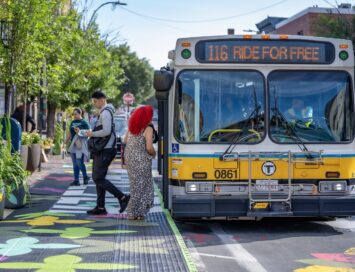
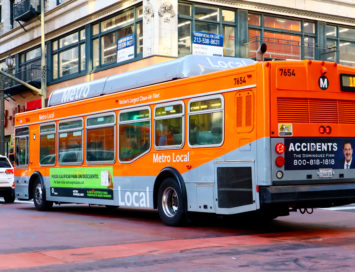
In Greater Boston, the BostonBRT program, led by ITDP US over nearly a decade, has accelerated regional progress toward Gold Standard BRT through a unique fusion of storytelling, art, and technical expertise. By working closely with municipalities, State agencies, and local advocacy partners, BostonBRT has made significant contributions to an ongoing movement to implement bus priority and elements of Bus Rapid Transit (BRT), changing the perception of what reliable bus service can be. ITDP also worked with municipalities in Los Angeles County to identify opportunities to tackle transport-related emissions through an equity lens, advocating for safe and accessible people-centered streets, connected cycling networks, and high-quality bus service in areas of need. ITDP US further supported the region’s advancement of safe cycling infrastructure through Los Angeles’ participation in the global Cycling Cities campaign.
Throughout its efforts, the US Program highlighted the power of reimagining US cities, focusing on high-quality bus transit and safe streets integrated with accessible infrastructure. The results helped build on a growing movement to shift Americans away from unnecessary driving trips and emissions in favor of cleaner, more equitable, and more inclusive mobility for all. Learn more about BostonBRT and related projects in the videos below, and subscribe to ITDP’s Sustainable Transport Bulletin for updates on our global work.